
Battery Formation Rectifier Manufacturer: 7 Questions to Ask Before You Place the Purchase Order
Every battery formation rectifier manufacturer will show you a specification sheet on enquiry. The sheet tells you what the equipment does under ideal conditions.
It does not tell you whether the transformer is specified for your ambient and duty cycle, whether the profile controller has enough steps for your chemistry, or whether the supplier will pick up the phone in year 7.
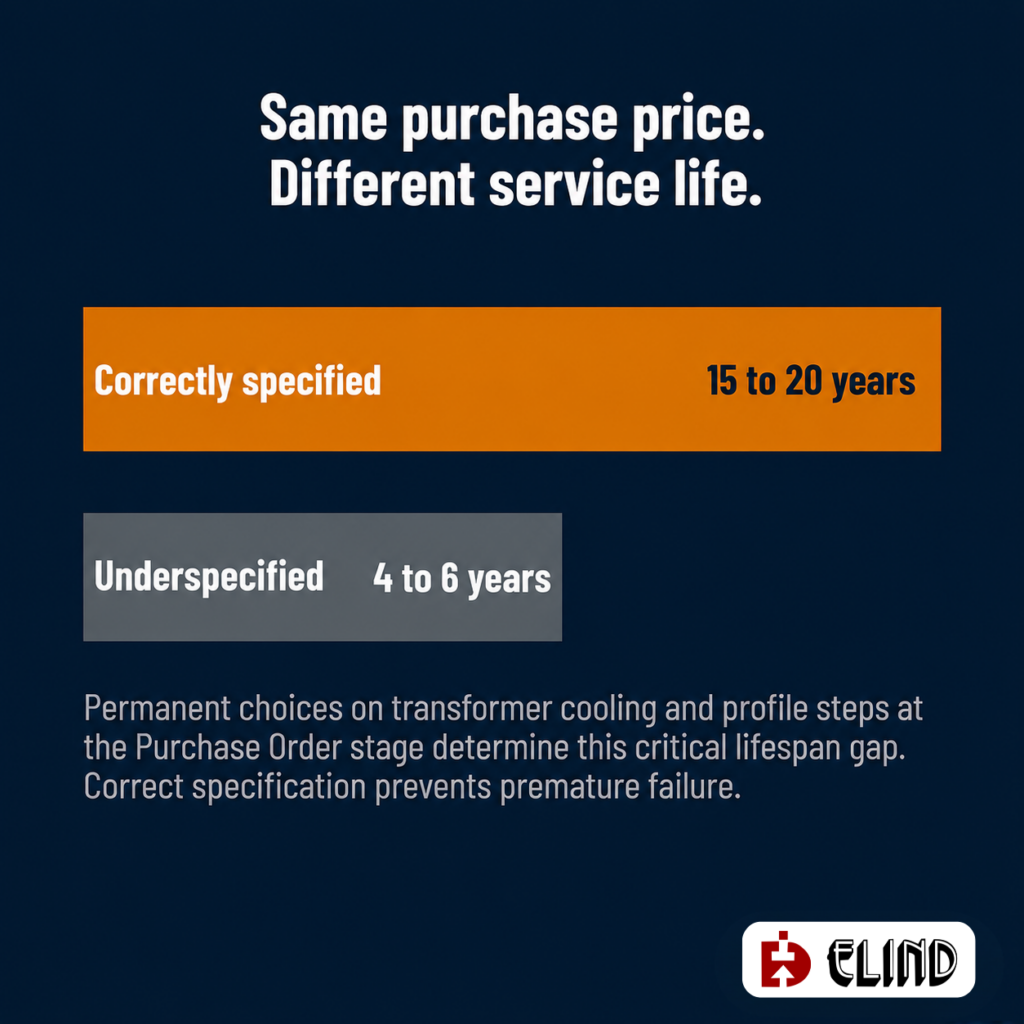
A formation rectifier is a 15 to 20 year asset when correctly specified. It is a 4 to 6 year asset when it is not.
The difference does not show up in the quotation stage. It shows up in year 3, when an air-cooled transformer fails on a continuous tubular duty cycle in a Bengaluru summer. Or in year 4, when a single-step profile hits its batch yield ceiling and the line cannot go higher.
Seven questions, asked before the PO is signed, change that outcome. Here is what each question is, and what a good answer looks like.
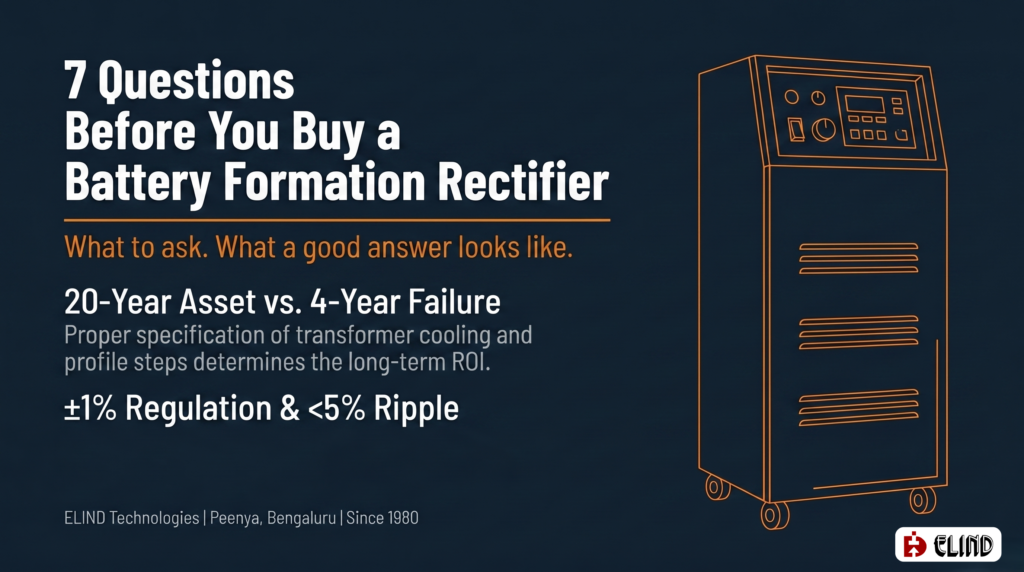
Questions 1 and 2: Output Voltage and Channel Count
Q1. Does the voltage range match your exact jar count?
Output voltage on a formation rectifier follows a simple equation. Three volts per jar multiplied by the number of jars in series equals the required DC output. A 100-jar series setup requires 300V output. A 50-jar setup requires 150V.
Most buyers leave this calculation to be done at installation. By that point, the transformer has already been wound to the wrong voltage. A good supplier confirms jar count at quotation and shows you the calculation on the proposal.
Q2. Does the channel count match your batch size and throughput target?
Channel count is not the same as current rating. A 4-channel unit at 30 amps per channel serves a multi-chemistry line better than a 2-channel unit at 60 amps. The channels carry independent profiles. The total amps figure does not.
Under-channelling at order is the most common formation capex mistake we see at site. Specify channel count against your monthly throughput target for the next 12 months, not your current monthly volume.
Question 3: Programmable Profile Step Count
Q3. How many programmable steps does the profile controller support?
Ten steps is ideal for tubular and VRLA chemistry. A 5-step profile hits its ceiling on the first complex cycle. The step count is set at order and cannot be upgraded in the field without replacing the controller.
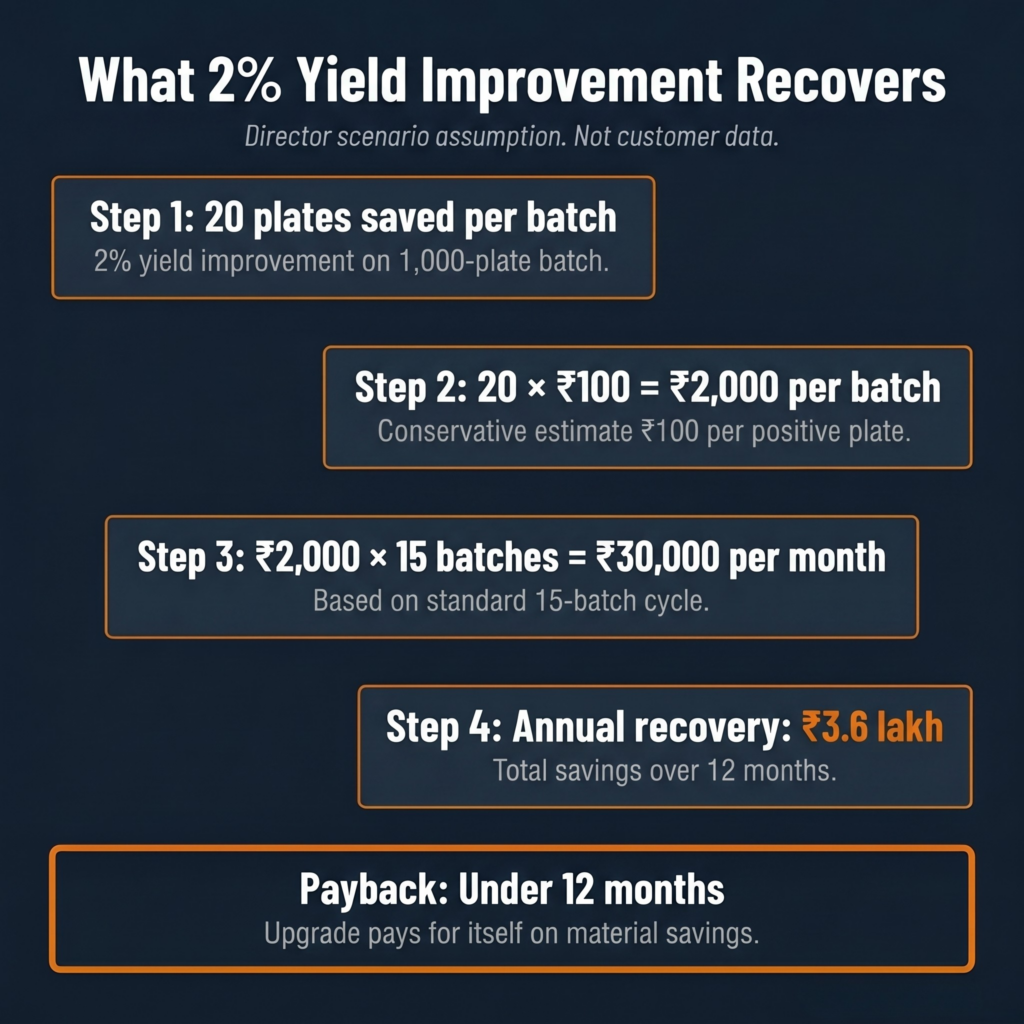
The rupee impact of a correctly matched profile is calculable. A 2 percentage point yield improvement on a 1,000-plate tubular batch at ₹100 per plate recovers ₹2,000 per batch. At 15 batches per month, that is ₹30,000 in material recovered every month. Annual recovery: ₹3.6 lakh. These are conservative Director scenario assumptions, not customer data.
A formation rectifier without enough profile steps for your chemistry is not cheaper than one with the right step count. It costs more, every batch, for the life of the equipment.
Question 4: Transformer Cooling Specification
Q4. Is the transformer cooling specification matched to your duty cycle?
For continuous formation duty in Indian ambient up to 45 degrees Celsius, oil-cooled is the engineering default. Air-cooled is the correct choice for shorter cycles and lower sustained current loads. An air-cooled transformer on a 120-hour tubular cycle in a Jaipur summer is operating outside its design envelope.
We have seen formation rectifiers replaced in year 4 because the transformer was air-cooled on continuous duty. The unit was priced 20 to 25 percent cheaper than the oil-cooled alternative at order. Three years of additional service life would have absorbed that initial cost difference twice over.
A unit replaced in year 4, at the same purchase price as one that runs 20 years, is not a saving. It is a loss recorded across capex, downtime, and reinstallation.
Questions 5 and 6: Regulation Tolerance and Output Ripple
Q5. What voltage and current regulation is guaranteed at full load and across the duty cycle?
Plus or minus 1 percent is the typical precision benchmark for industrial formation applications. Ask for it at full load, not at peak conditions. Bath impedance shifts as temperature rises through the cycle. A rectifier that holds ±1 percent regulation across the temperature drift is delivering specification. One that holds it only at the start of the cycle is not.
Q6. What is the output ripple specification at full load?
Less than 5 percent ripple at full load is the practical ceiling for consistent batch quality in most SLI and VRLA applications. Higher ripple introduces electrochemical noise into the formation cycle. That noise raises the variance in Ah measurement accuracy and degrades grading consistency at the end of the cycle.
Ask for the ripple figure at full load, not at nominal or no-load. The difference is not trivial. Many quotation sheets quote ripple at nominal and leave full-load figures off the document entirely.
Question 7: After-Sales Support and Reference Customers
Q7. Can the supplier name a reference customer in your battery chemistry running for 5 or more years?
This is a legitimate vendor evaluation question. A supplier who cannot answer it is either new to the product line or not confident in their installed base. Either answer is information you need at the PO stage, not after the warranty expires.
ELIND has been building battery formation rectifiers in Peenya, Bengaluru since 1980. Our EPFR units operate at named reference customers across SLI, VRLA, and tubular chemistries across different geographies. We will arrange a reference conversation with a customer in your chemistry if it helps your evaluation.
The 7-year question is the one most buyers do not ask. A battery formation rectifier manufacturer whose oldest reference customer goes back 5 years is showing you their actual product lifecycle. One who deflects the question is showing you something else.
What This Means for Your Next PO
The seven questions above are not negotiating leverage. They are specification clarity. Each one points to a specification decision that is made at order and cannot be field-upgraded later.
A formation rectifier specified correctly to your jar count, throughput target, profile chemistry, duty cycle, regulation requirement, ripple ceiling, and supplier track record runs 15 to 20 years on the same purchase price as one that runs 4 to 6. The gap between the two outcomes is the seven specifications above, written into the PO before the transformer is wound.
Specify them at order. Confirm them in writing. Verify the calculations are done by the supplier, not deferred to installation.
Talk to ELIND About Your Formation Rectifier Specification
ELIND Technologies has been manufacturing battery plate formation rectifiers from Peenya, Bengaluru since 1980. Every EPFR unit is built to your specification: output voltage matched to your jar count, channel count matched to your batch size and throughput, transformer cooling matched to your duty cycle, and a 10-step programmable profile matched to your chemistry.
If you are evaluating a formation rectifier for a new line or capacity expansion, send us your current setup and throughput requirement. by email or call us / drop us a message on WhatsApp. We will send you a technical proposal within 48 hours.


