-
Battery Formation Rectifier Manufacturer: 7 Questions to Ask Before You Place the Purchase Order
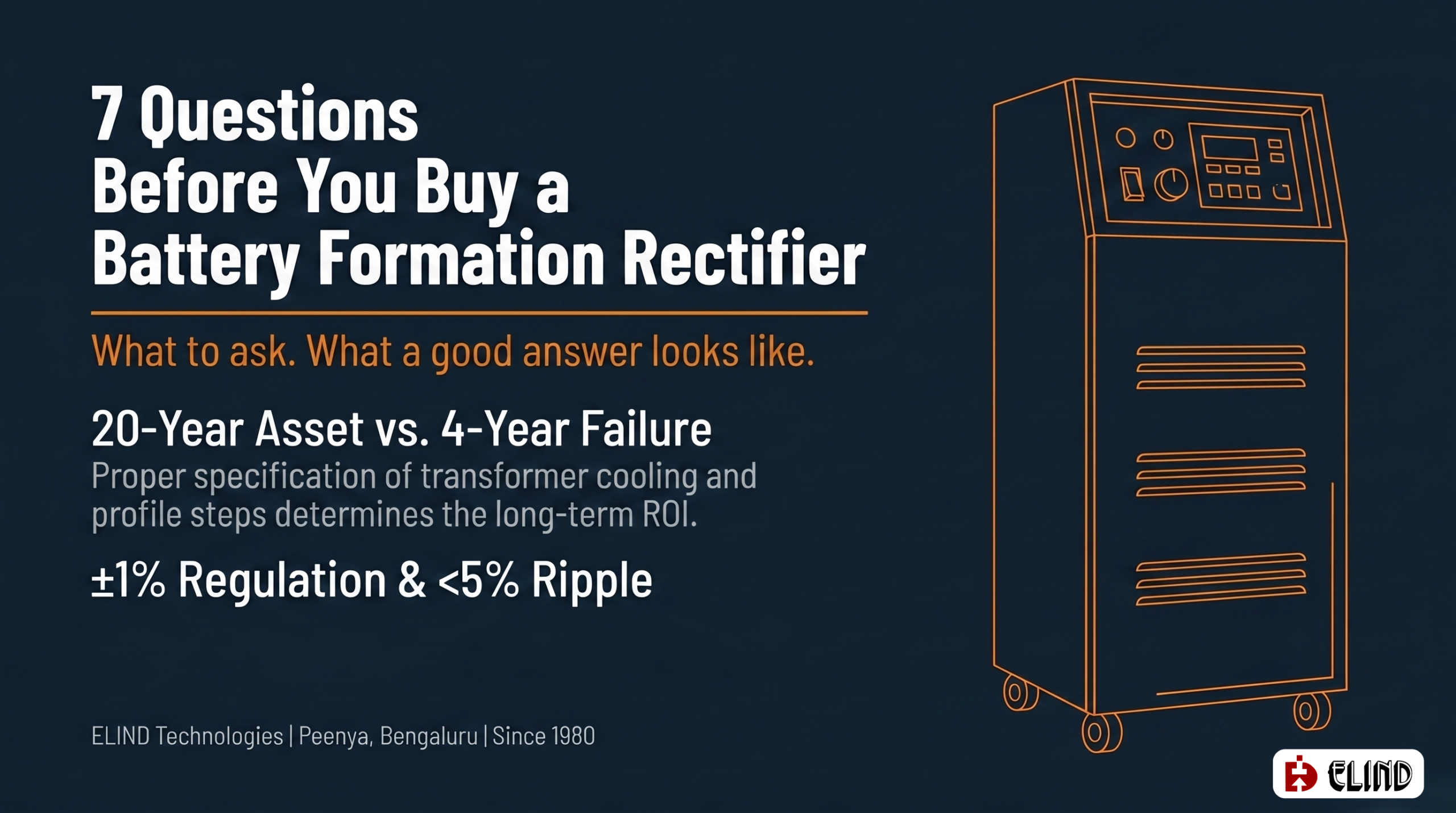
Every battery formation rectifier manufacturer will show you a specification sheet on enquiry. The sheet tells you what the equipment does under ideal conditions. It does not tell you whether the transformer is specified for your ambient and duty cycle, whether the profile controller has enough steps for your chemistry, or whether the supplier will…
-
Programmable Battery Formation Rectifier: What 10 Steps Deliver
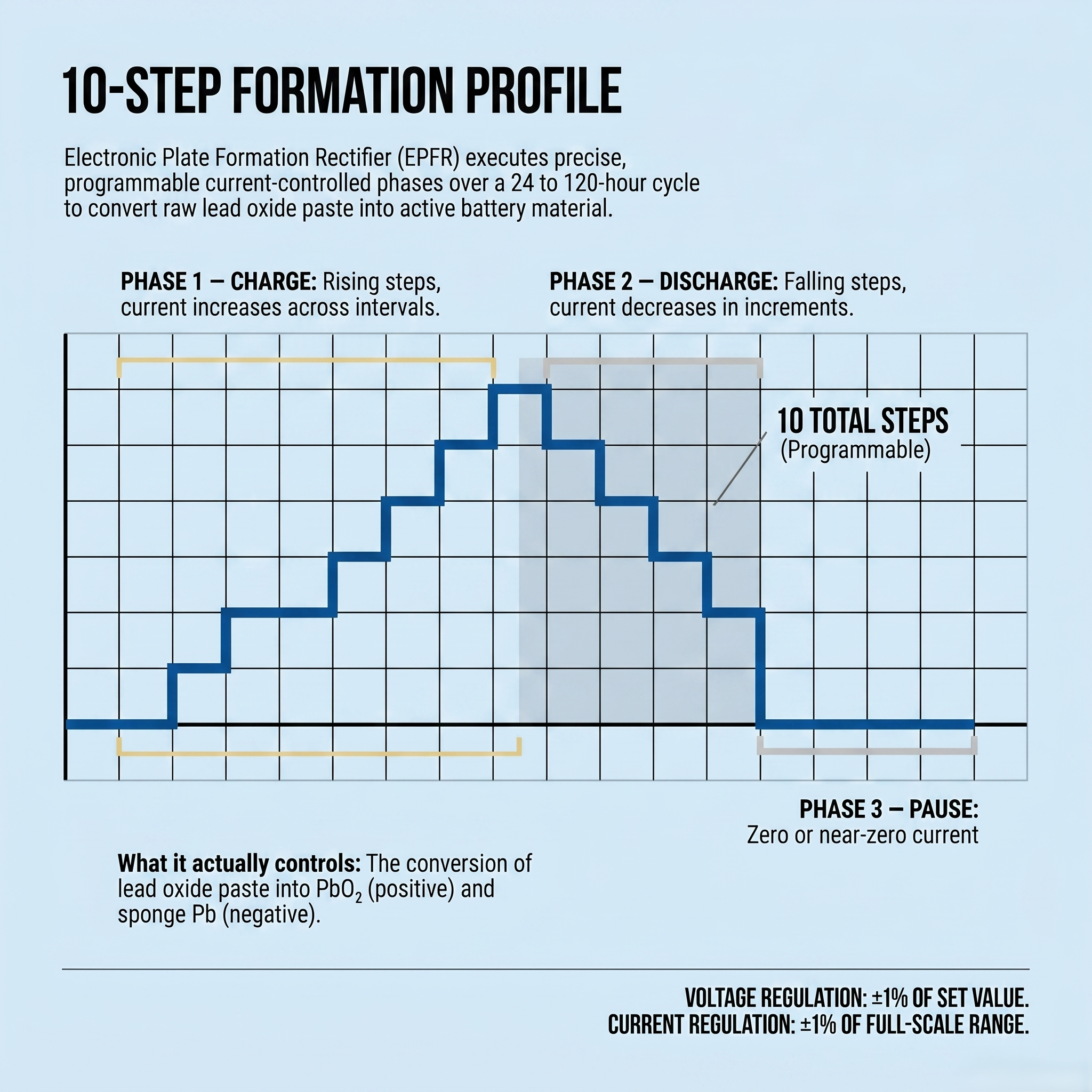
A formation rectifier is not specified by its maximum current rating alone. The specification that separates a programmable battery formation rectifier running at consistent batch yield from one hitting a ceiling every cycle is the step count and per-channel independence of the controller. For tubular and VRLA chemistry, this gap shows up in batch rejects,…
-
Battery Green Plate Charger: How Indian SLI and VRLA Manufacturers Build Capacity After Formation
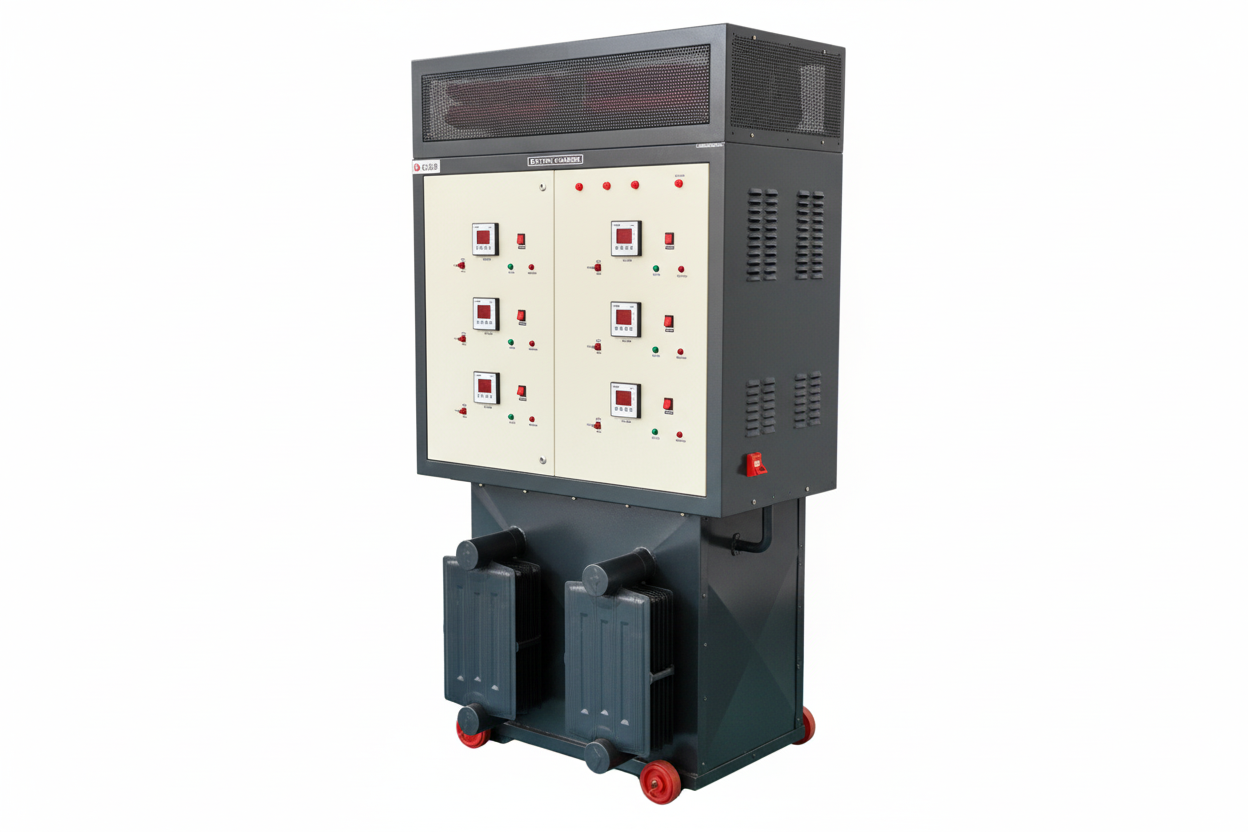
Every battery that ships from your plant has been through a charge-discharge cycle that brought it to rated usable capacity and graded it for dispatch. The equipment that runs that cycle sits between the formation line and the QC bench. Most plants discover its limits only when production volume outgrows the channel count they bought….
-
HRD Tester vs Capacity Tester: Which Test Protects Your Line?
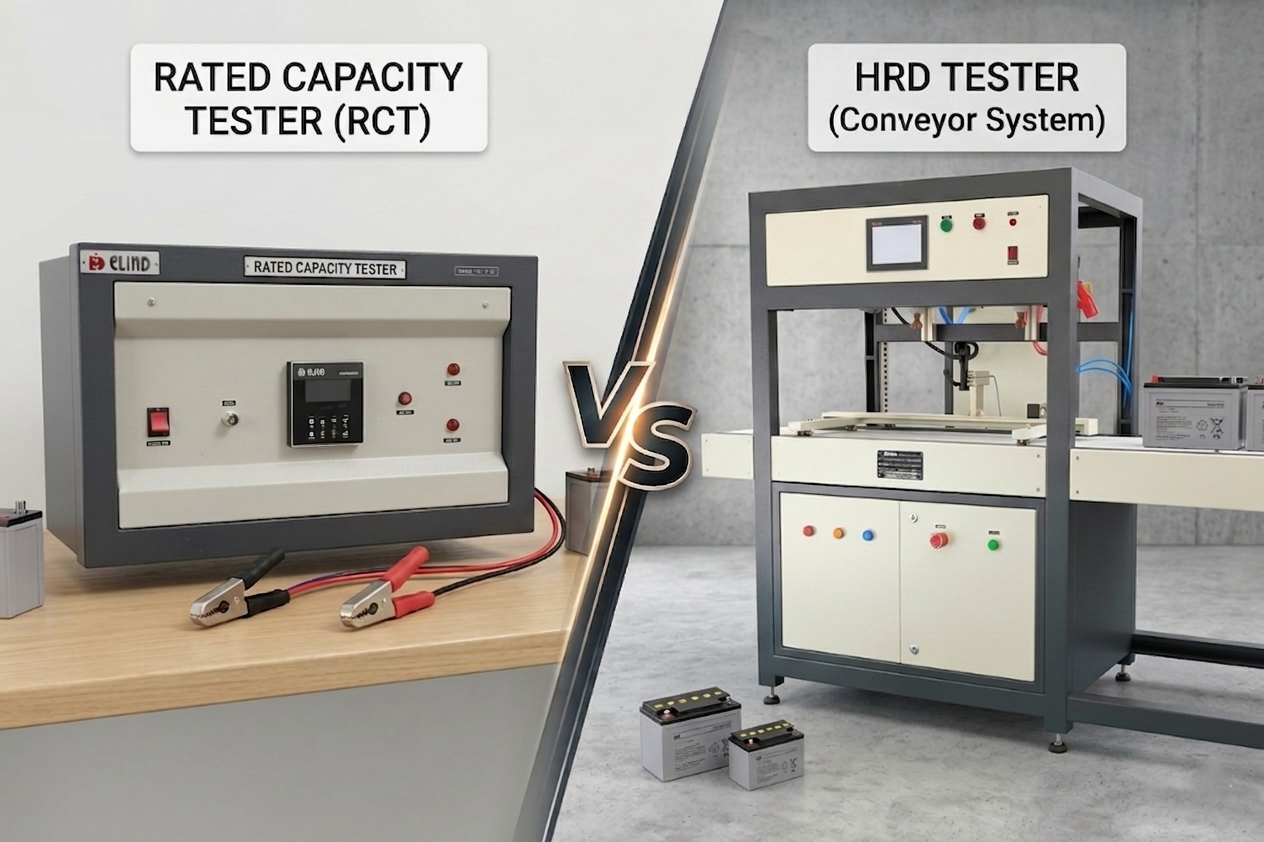
Most battery manufacturers start with one testing instrument and make do. Either a capacity tester inherited from the QC lab setup, or an HRD tester added after a run of customer complaints. Rarely both. Rarely placed correctly in the production flow. The result is a QC process that catches some failures and ships the rest….
-
Battery HRD Tester: Why High-Rate Discharge Testing Is Your Production QC’s Last Line of Defence
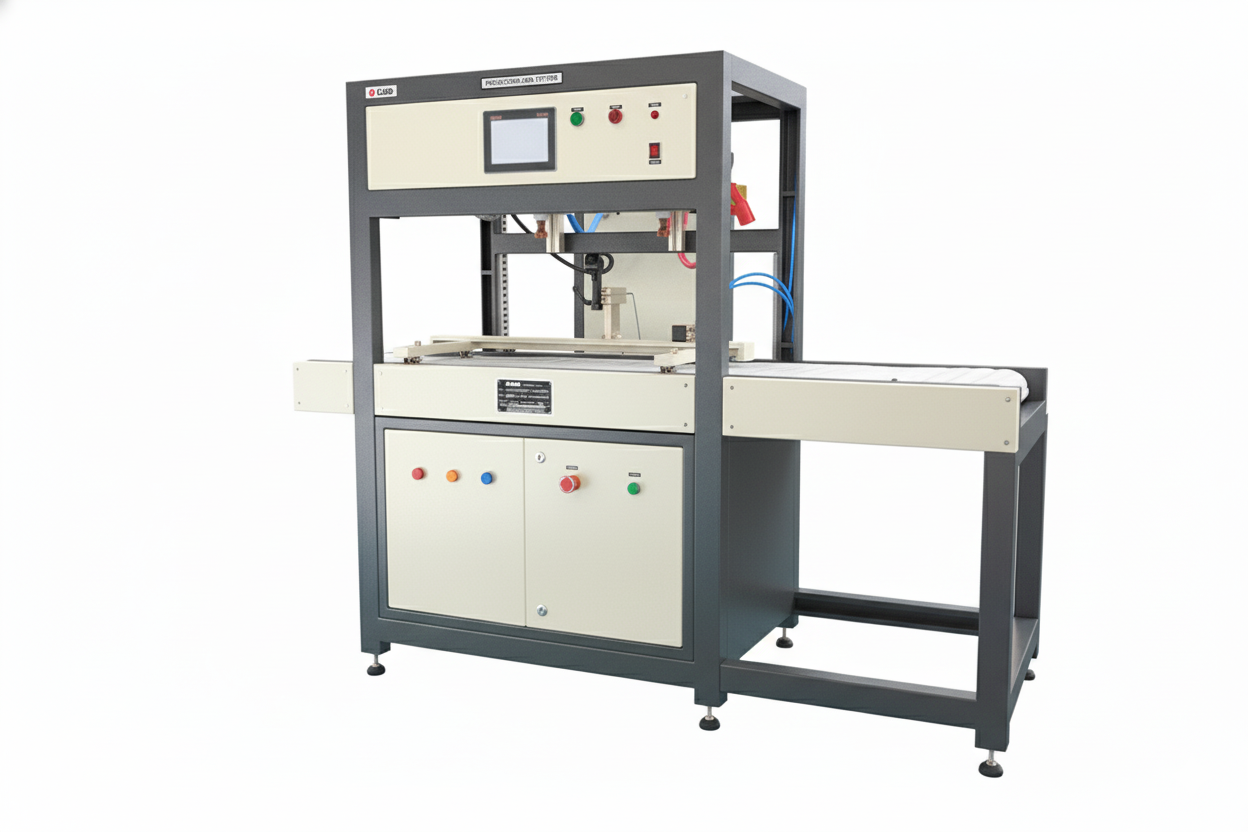
Your formation line ran clean. Electrolyte fill was on spec. Visual inspection passed every unit. Three weeks after dispatch, the customer calls – batteries are failing under load. The cell welding was weak on a batch of units, but nothing in your QC process flagged it. That gap between your production floor and your customer’s…
